The best residency data, finally made usable.
The best data, the worst interface.
FREIDA is the AMA's residency database, central to Match Day, the moment when roughly 46,000 medical students a year decide where they'll train. The AMA owns the best data of anyone. It's effectively the master record on U.S. medical programs. But the product was a thin UI bolted onto that database, a dated interface sitting on top of exceptional data. Competitors shipped slick AI-driven tools, and students drifted to Reddit and Doximity, apps that looked modern but didn't have AMA's depth. The paradox: the most authoritative source was losing trust because it looked like a 1990s database. My job was to pull students back, and make a career-defining decision feel clear enough to trust.
Research, workshops, then four key decisions.
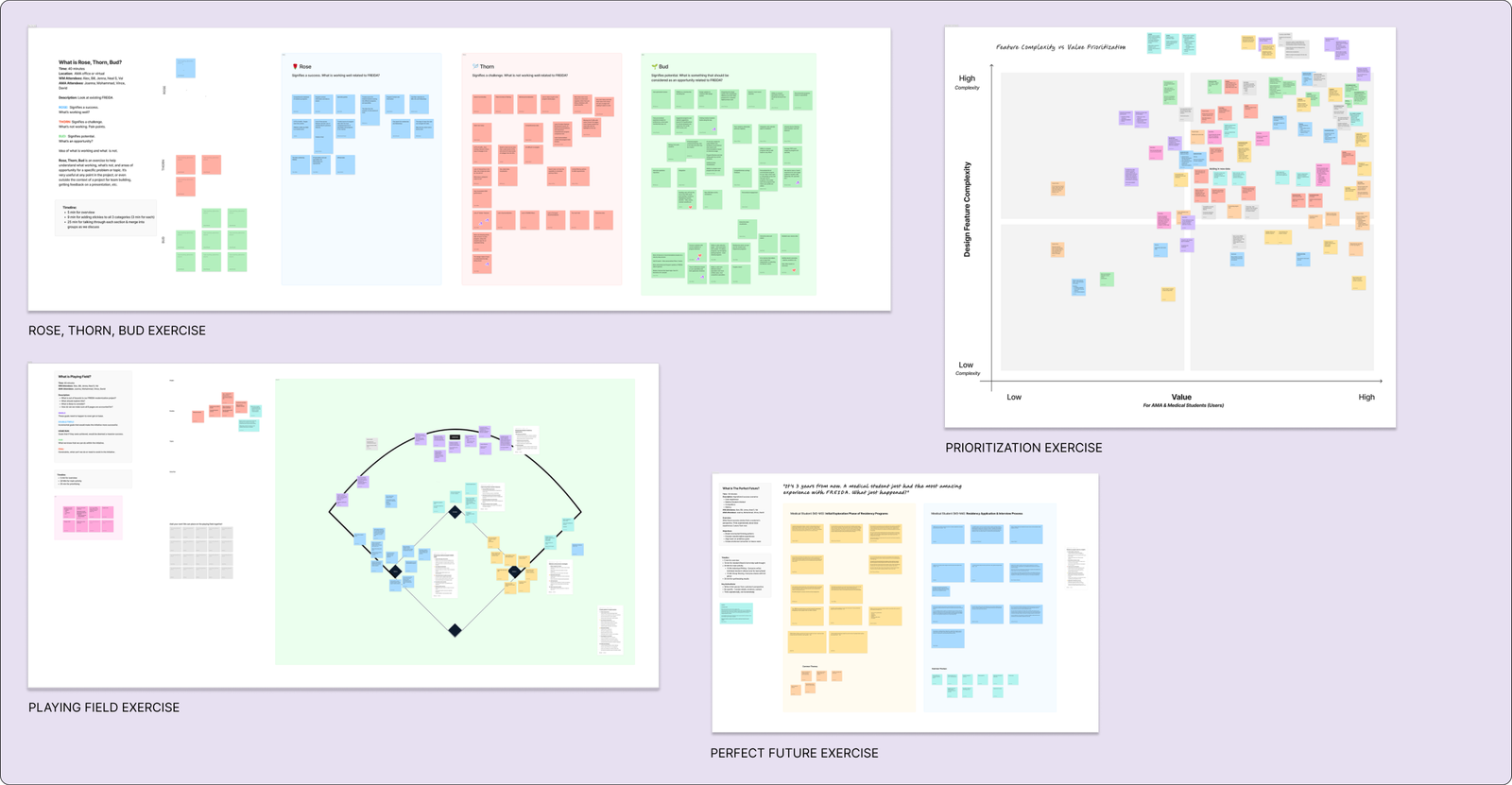
I led a small team (a senior designer, an experience strategist, and healthcare SMEs) through interviews with 10 students, from rural-medicine hopefuls to competitive specialists, plus the schools and a competitive read. Out of that came personas, jobs-to-be-done, and one core insight: students wanted attribute-based recommendations from a source they could trust for the biggest decision of their lives. I ran stakeholder workshops (Perfect Future, Rose/Thorn/Bud, the Playing Field, a value-vs-effort 2×2) to pin down what "better" actually meant for the AMA. Then I designed four anchors: dual-mode discovery (advanced search plus AI recommendations), a three-tier gating model (anonymous → free → paid member), compatibility scoring ("you're 85% compatible"), and AMA insight cards that explain why a candidate is strong. AI rapid-prototyping (Claude code, Figma Make) fed a real Figma process, on a new design system I extended in Claude.
Data turned into a decision tool.
Near-daily prototypes in front of students and stakeholders pushed every iteration toward less. The MVP earned real buy-in across the org, from the partnering VP up to the CEO, and students decided faster with it: the same depth of data, far better organized, with visualization that made months of dense per-school detail scannable at a glance. The throughline, reinforced by earlier work at J&J: data trust is the whole game. AI recommendations have to show their work and explain why, or people discount them. The hardest constraint was legibility. AMA's data was rich but fragmented, so next time I'd run a full data audit up front, before a single screen. The master source stopped looking like a 1990s database.
.png)
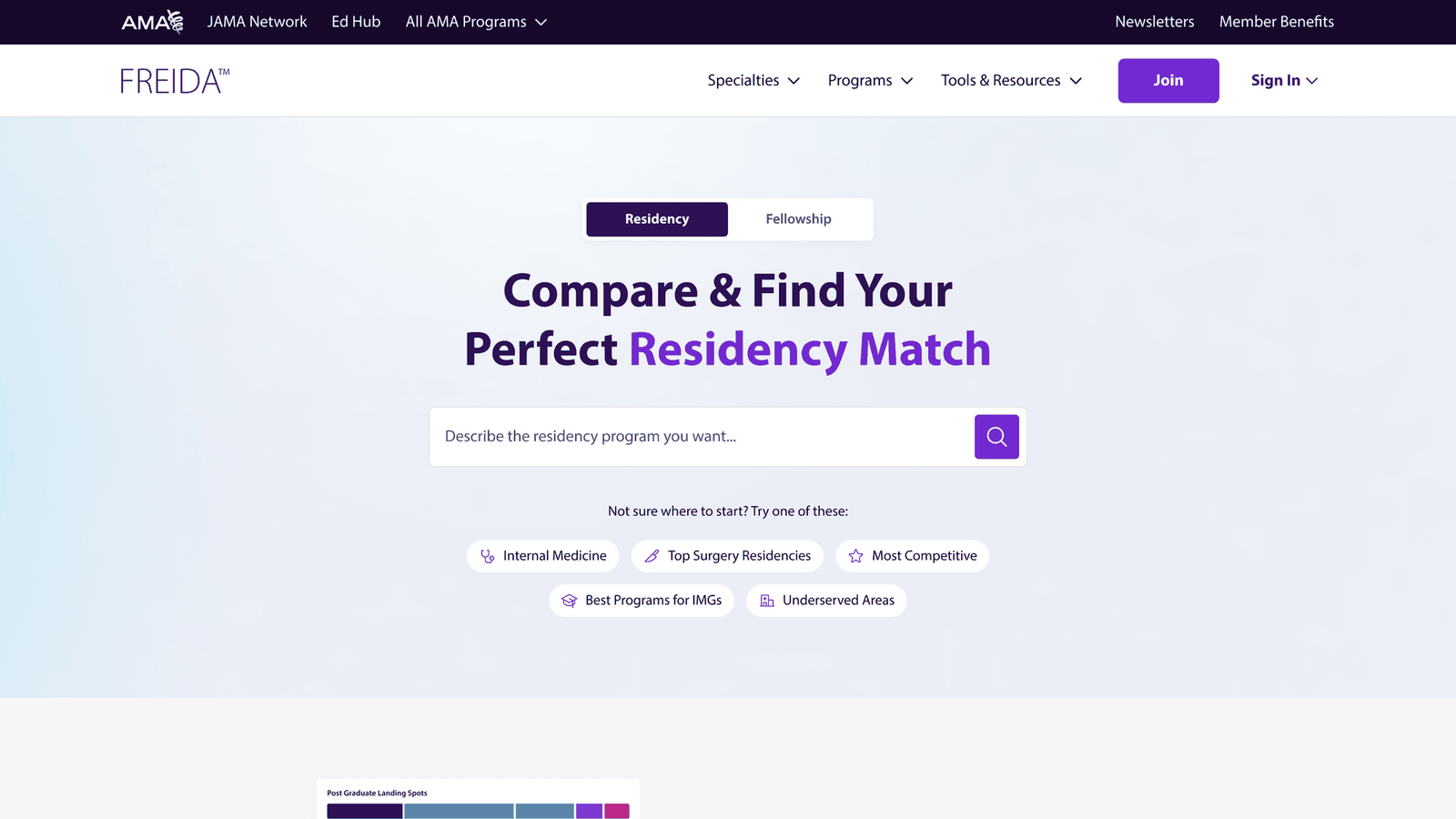
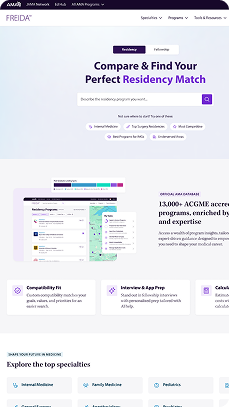
FREIDA homepage
The homepage is an inviting entry point that states FREIDA's value right away: compare and find your perfect residency match, with search front and center.
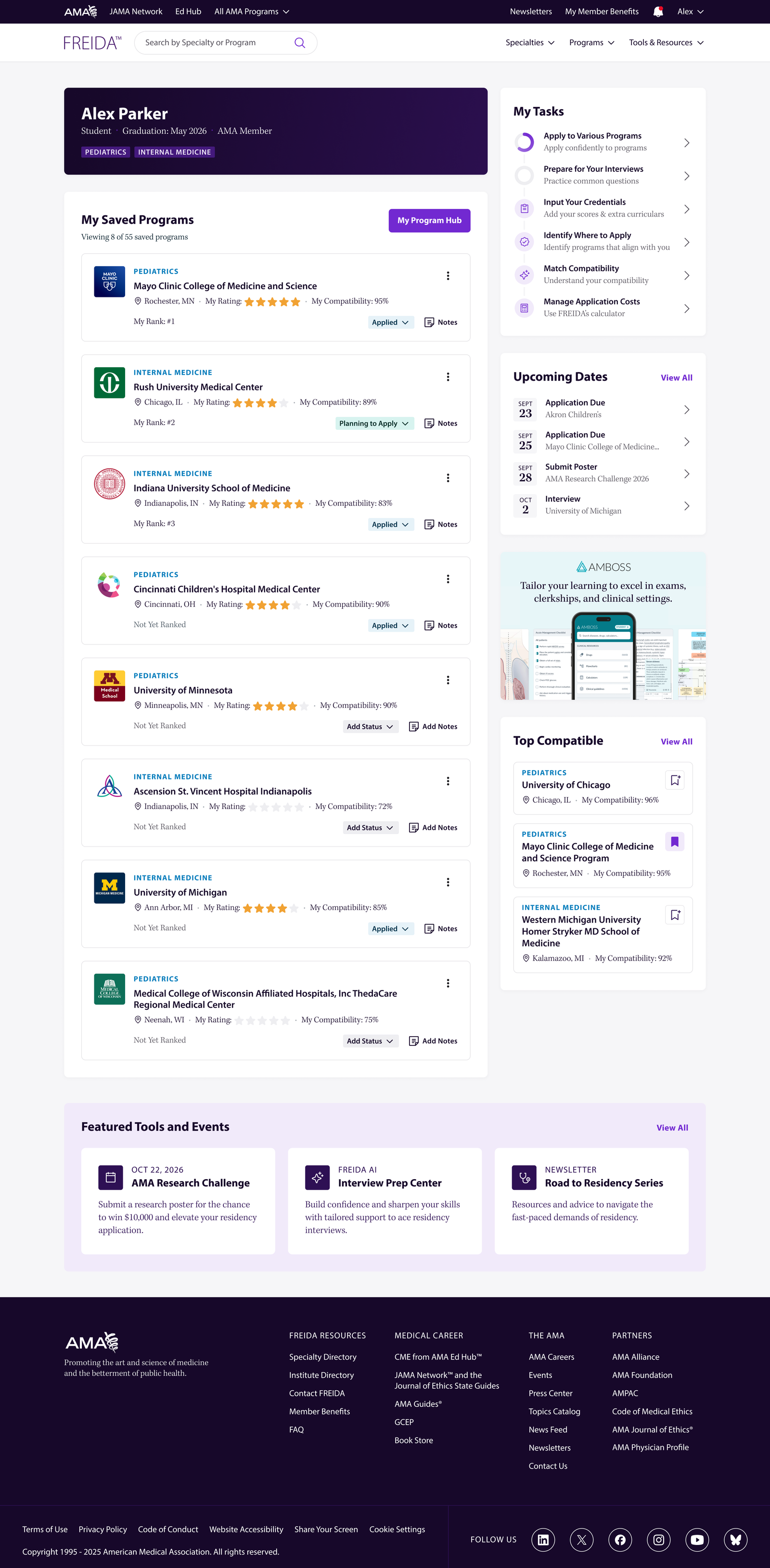
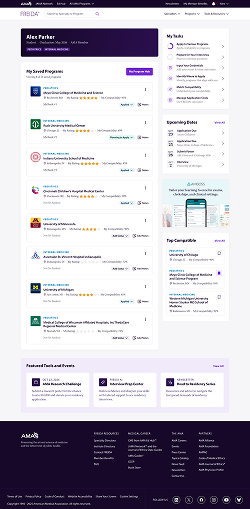
FREIDA user dashboard
A personal home base. Compatibility fit, interview and application prep, and cost calculation, each one AI-enhanced.
.png)
FREIDA compare programs
Put programs side by side and weigh what matters: rank, rating, cost of living, positions, length, and compatibility. The hard call gets easier when the differences sit right next to each other.
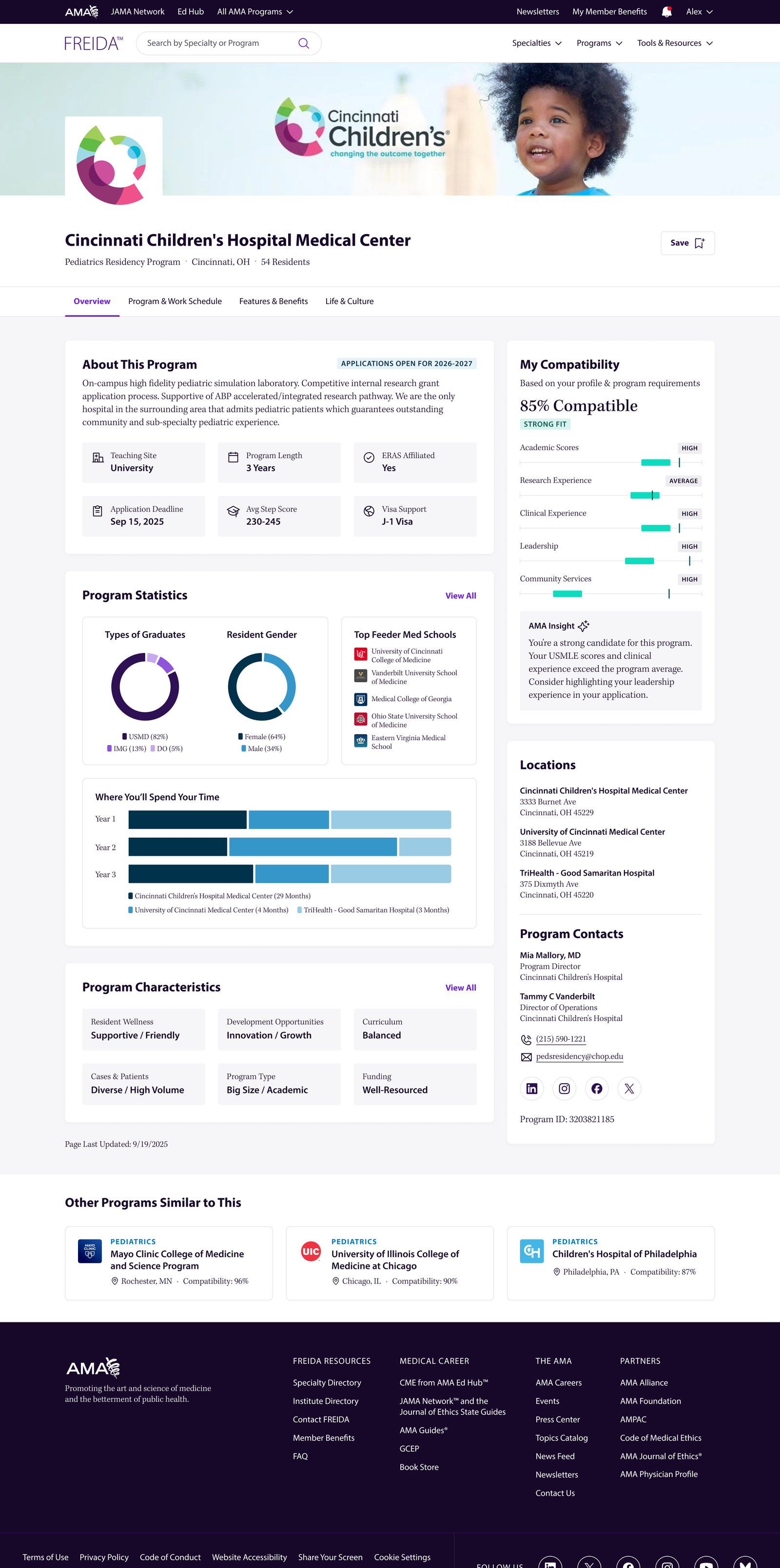
FREIDA program hub
Every program gets a clear overview: the story, the key stats, where you'll spend your time, and a compatibility read against your profile.
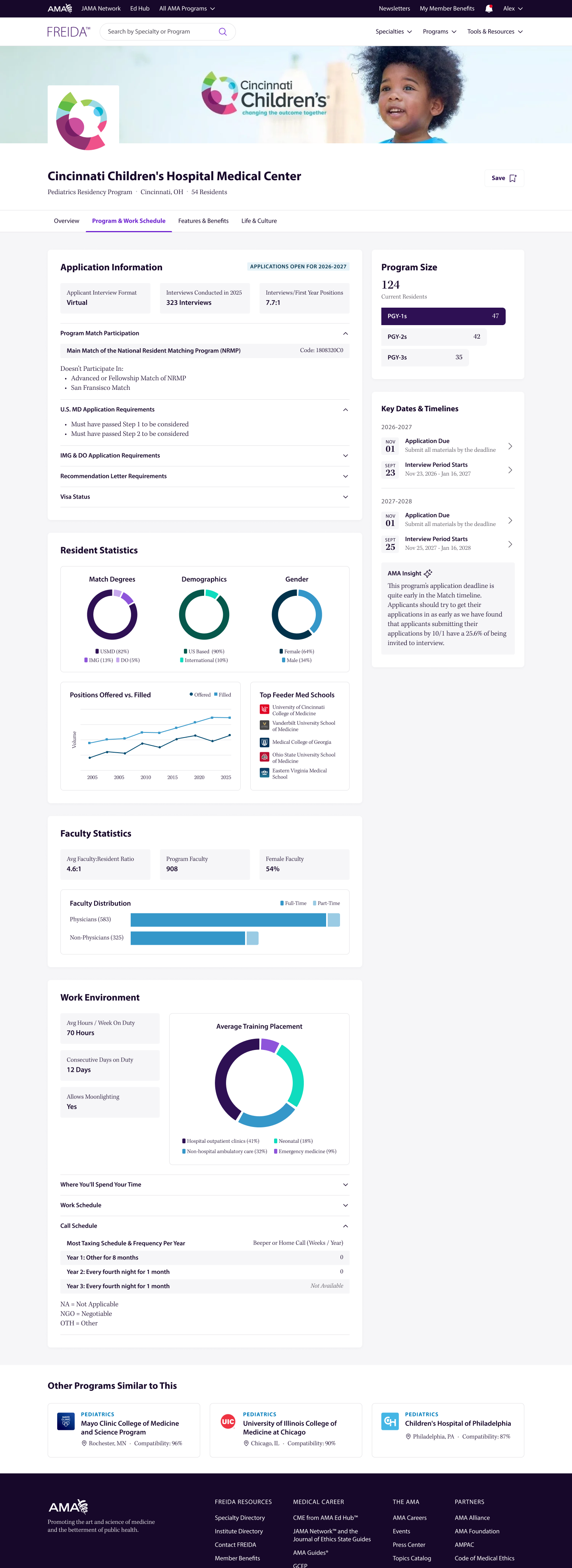
FREIDA program statistics
The program and work schedule in depth. Application requirements, match data, resident stats, and what a week on duty actually looks like.
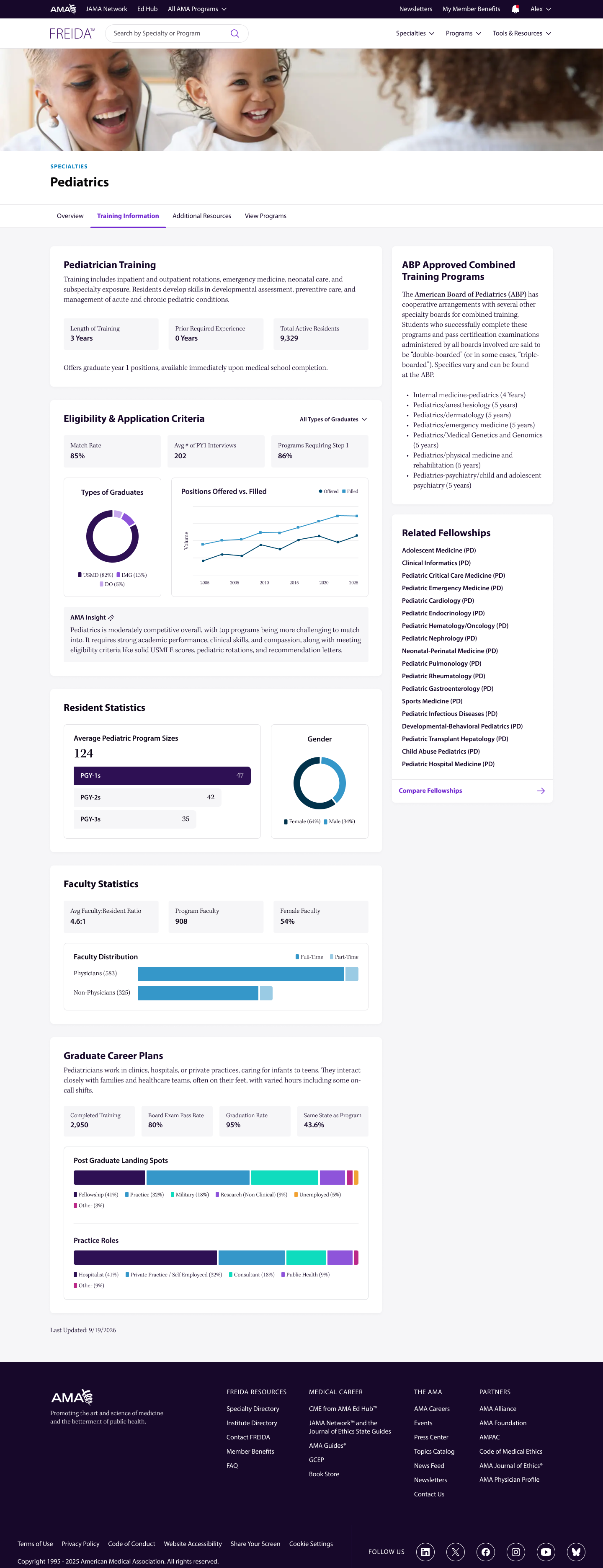
FREIDA specialties overview
A specialty at a glance. Training structure, eligibility, resident and faculty stats, and where graduates land after they finish.
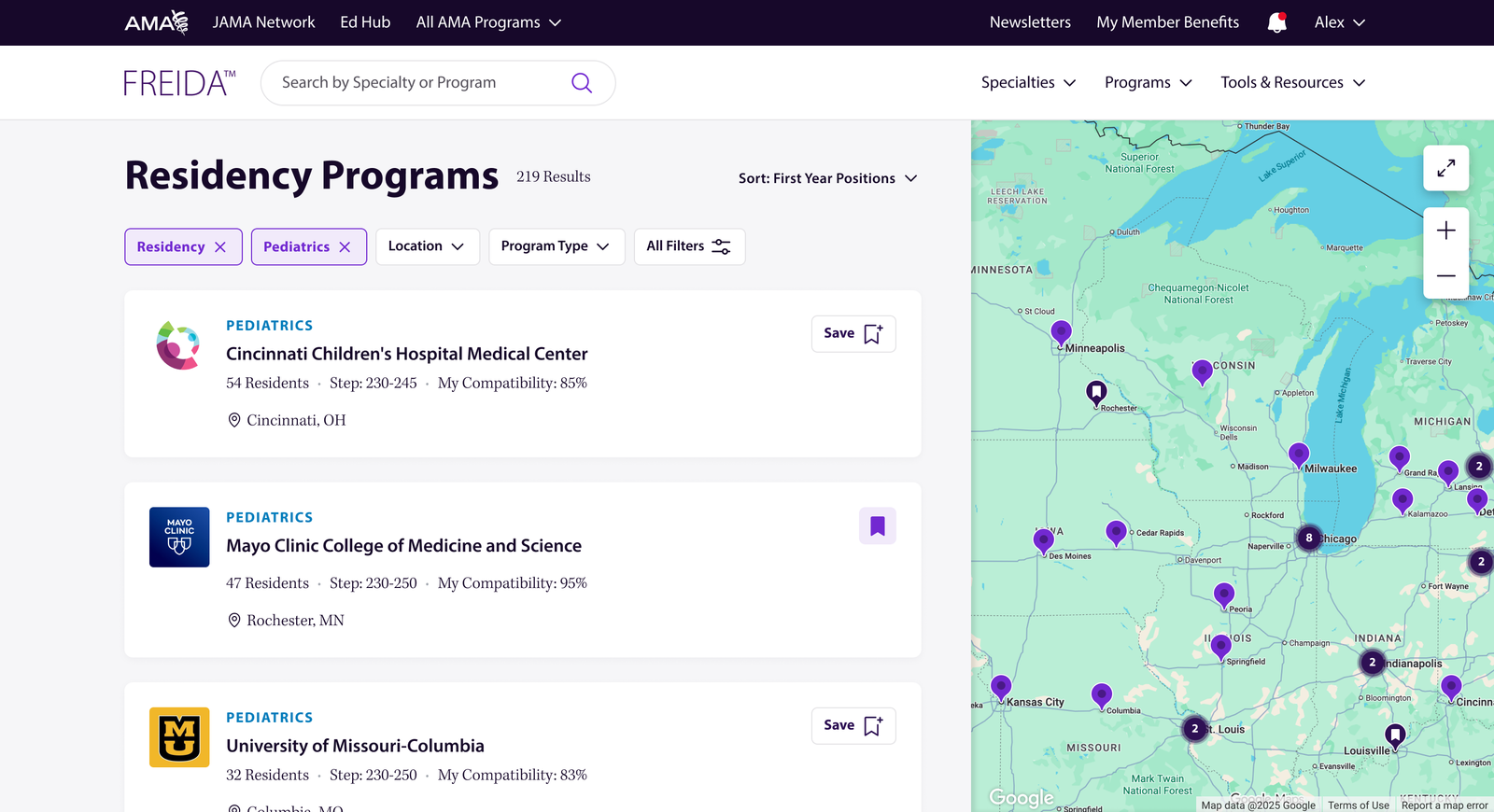
FREIDA search
Search and browse hundreds of programs in a list paired with a live map, so location and fit come together in one view.
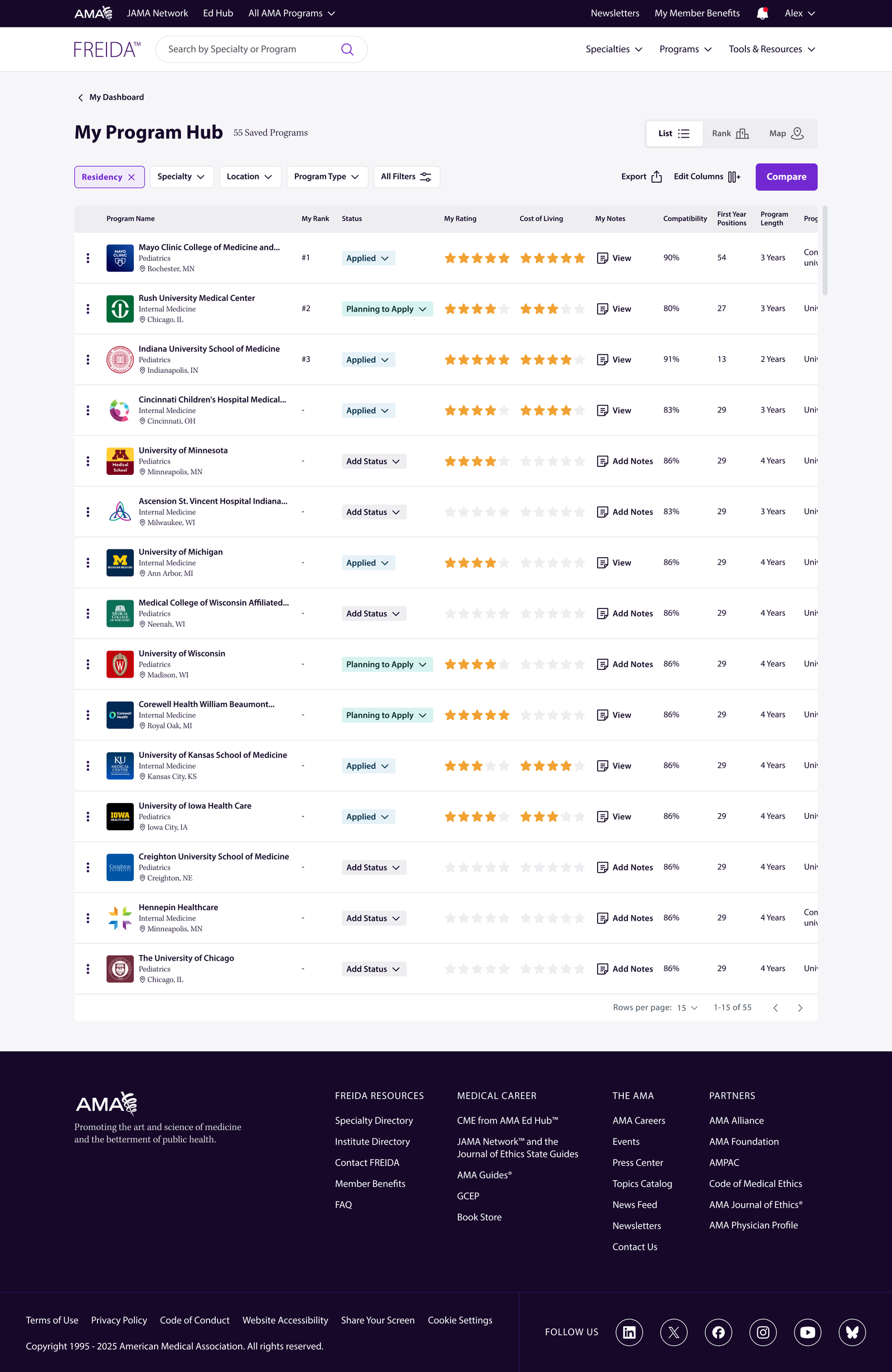
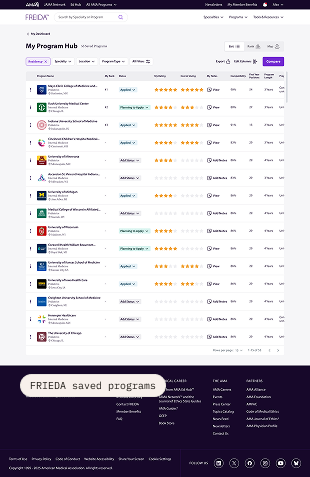
FREIDA saved programs
My Program Hub. Every saved program in one sortable table with rank, status, rating, notes, and compatibility, ready to act on.