Powering Hollywood's digital pipeline.
Best in breed, and losing ground.
Shotgun is a production-management platform for film and visual effects, used by 50,000+ studios and VFX houses, with a technical Emmy to its name. Autodesk acquired it, but after ten years upstarts with newer features and cleaner UIs were eating its lunch. A decade of feature-driven decisions had also left it dense and inconsistent: the first-time experience scored just 2.71 out of 5, 85% of new users needed external help, and 80% wanted to learn through video. The PMs were veteran VFX people anchored to the old big-studio era of Disney and Sony, while the work had shifted to smaller houses doing jobs for Netflix and Hulu, and Shotgun wasn't built for those small teams. My job was to rebuild it while it kept running. No clean branch, no rewrite. Modernize it in place, for very different kinds of users.
Research-led, role-aware, modular.
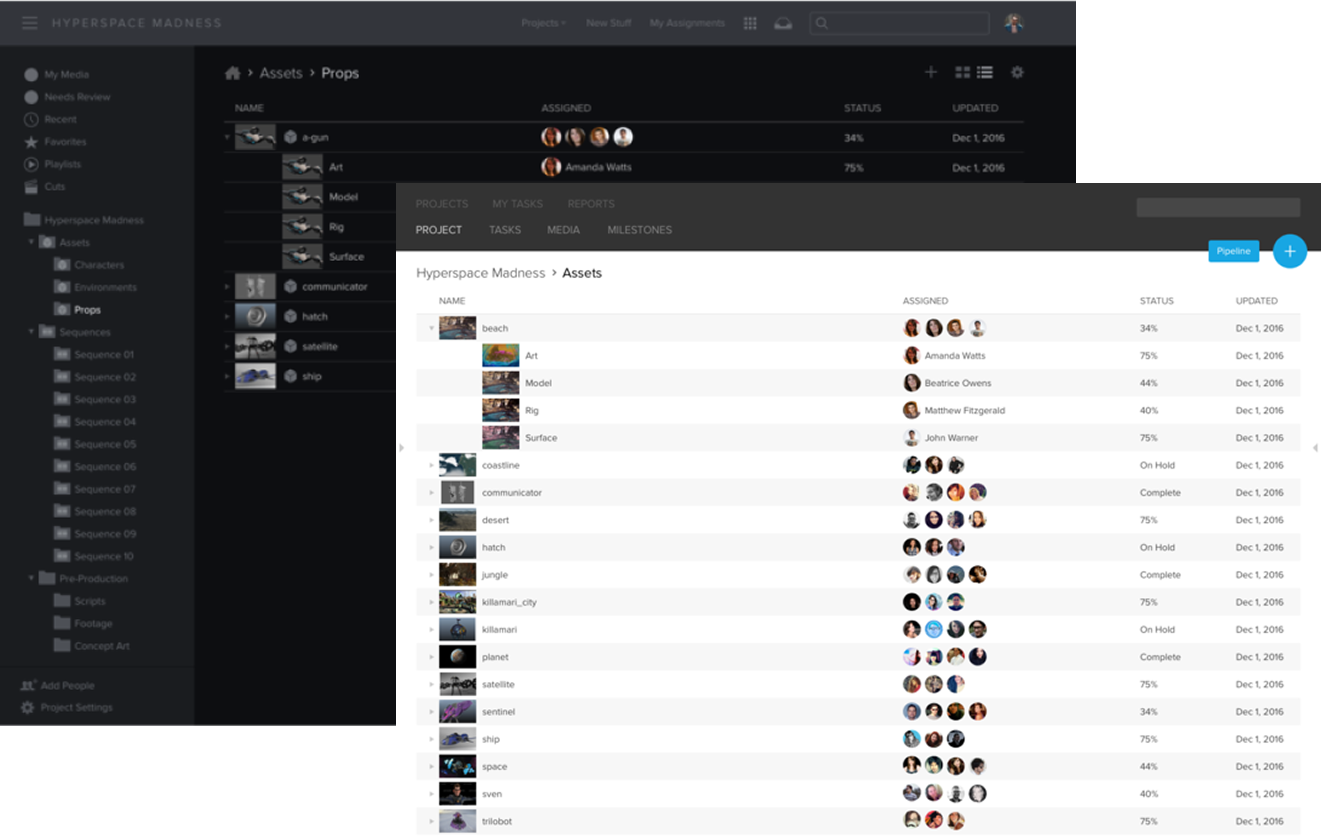
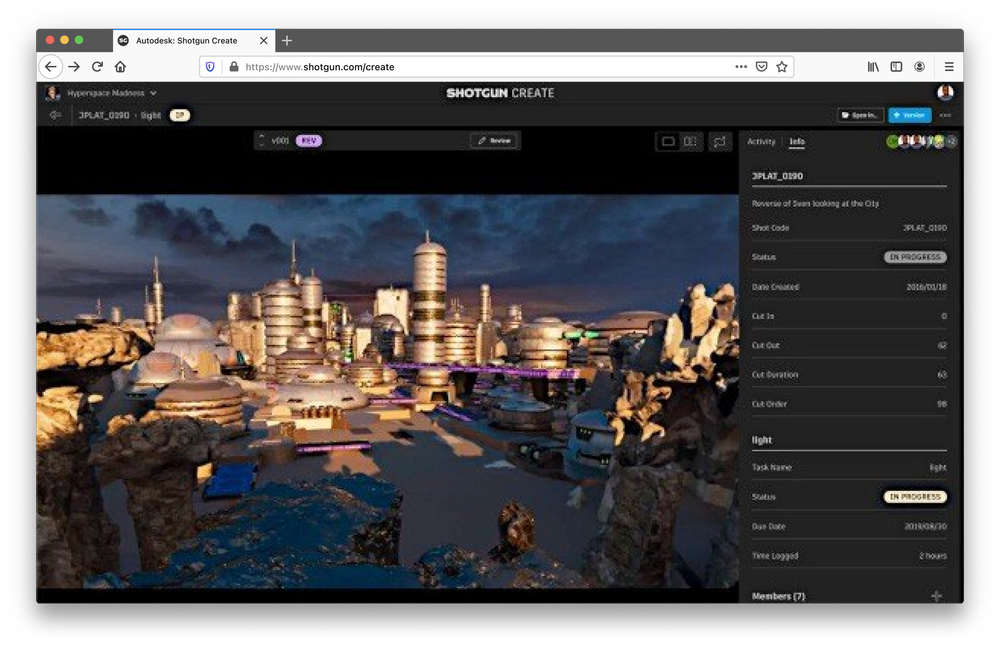
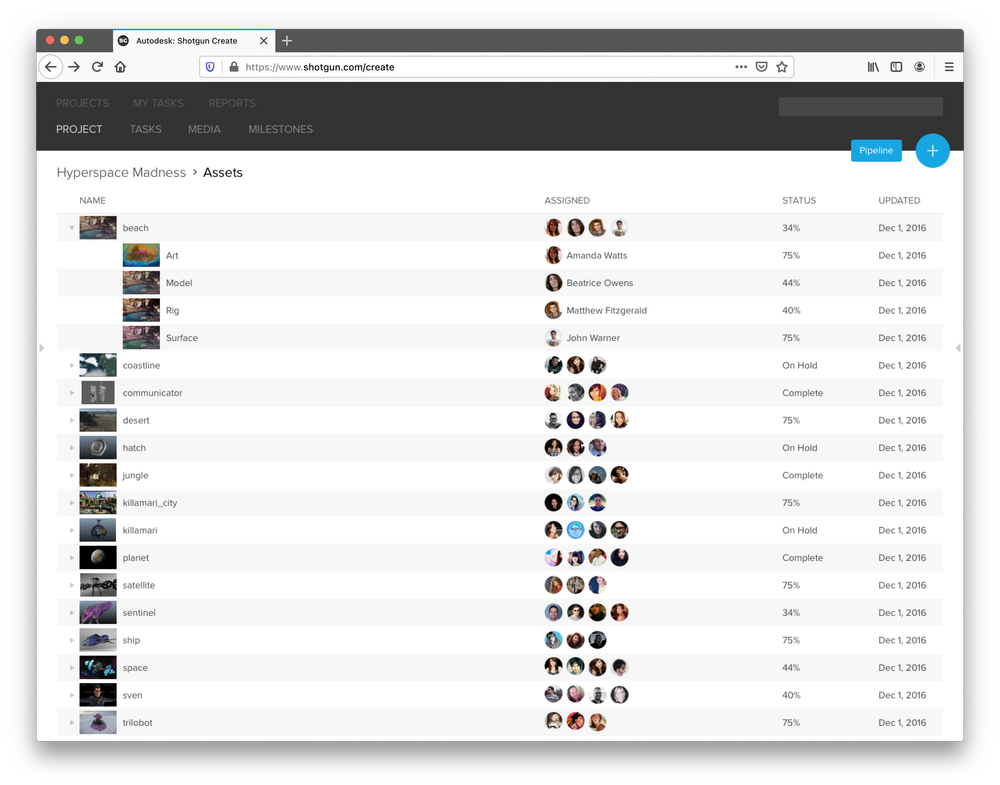
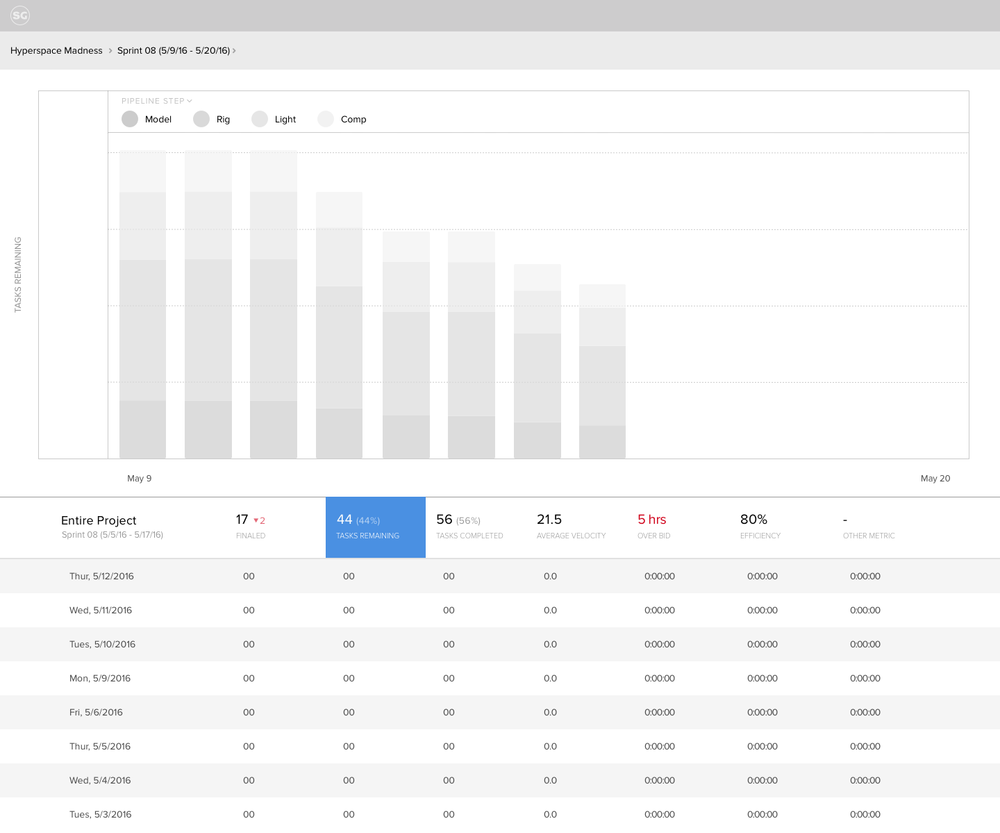
Another researcher and I embedded in studios in LA, Montreal, and London, large and small, watching and filming how people actually worked, then turned it into a design manifesto. The defining insight: two personas needed different interfaces, not just different features. Artists work in dark rooms in animation tools, so a light UI was jarring; producers work in bright offices in Excel and expect a light background. So instead of a toggle, I committed to persona defaults, a dark theme around artist workflows and a light theme around producer workflows. A React design system held it together across web, mobile, desktop, and plug-ins, and rebuilt onboarding from a multi-day, support-heavy slog into minutes. Research even surfaced a brand-new product: users were exporting Shotgun data into Tableau, so we built Shotgun Insights, an analytics layer, to a working MVP in six weeks.
Faster setup, far happier users.
Onboarding went from days to about 15 minutes, satisfaction climbed, and far more first-time users got to success on their own. Shotgun Insights landed so well that 6 of 8 beta teams wanted it full-time. And the design system won Autodesk's most-innovative-product award, then became the baseline for the company-wide Autodesk Design System.
Design-thinking process
Empathize
Embedded in studios in LA, Montreal, and London. Trained PMs to run research, which more than doubled our reach.
Define
Synthesized findings into a design manifesto and personas: producers, managers, artists, coordinators.
Ideate
Modular architecture, role-based UI, streamlined onboarding. Research surfaced Shotgun Insights.
Prototype
A React design system with dark and light themes. It won Autodesk's X award in 2016.
Test
Weekly roundtables with power users, studio visits, and analytics drove iteration every two weeks.